
Meet dish’s newest contributor Harry Butterfield

Say hello to Harry! One of the most successful alumni from MasterChef Australia, he’s known for his love and expertise in seafood. Find his recipe for Crayprese Summer Pasta in the 2025 edition of dish HOLIDAY
How has life changed for you since competing in MasterChef Australia?
In some ways, life’s completely changed — in others, it’s kind of the same. The biggest change is that I now get to earn a living doing something I’m genuinely passionate about. Growing up, I always admired people who loved their job, but I felt like it out a far-fetched reality. Being able to make a career out of food and cooking where its honestly a dream come true, and I’m so grateful for it.
As for what hasn’t changed — I was cooking, fishing, and diving just as much before MasterChef, but now I get to call it “work”.
Who inspired your love of cooking, and when did you start getting busy in the kitchen?
Like most people, my love for cooking started young, through family. My grandma, nan, mum, and dad all played a part in teaching me to love food in their own ways. My family has always encouraged me to follow my passions, and that support definitely helped shape who I am.
I think my love for cooking really took off when I realised how well it paired with my other obsession — the ocean. I think this is where my creativity with food really flourished. There’s nothing more rewarding than catching or gathering your own seafood and getting creative with it. You put so much time and effort into finding those ingredients, so when you get to share your catch and your cooking with family and friends, you want to really honour the ingredients and it feels extra special.
Do you have a favourite seafood — or maybe a top three?
Picking just one’s impossible, but if I had to name three I would go with mud crab, Spanish mackerel, and oysters. Mud crab is one of life’s simple pleasures — in my opinion nothing beats a freshly steamed muddy and an ice-cold beer. Spanish mackerel are up there for me too — they’re fun to catch, taste incredible, and can vary so much depending on the season. In Queensland, the summer fish are smaller and leaner, while the winter ones are so fatty you have to wipe your knife between slices. Both are delicious, but so different to cook and eat.
And oysters — they’re delicious, super good for you, and even better for the environment. They’re filter feeders, so they actually help clean and maintain the waterways they’re farmed or grown in. Whether we are talking Bluff oysters far down south in New Zealand, big black lips from North Queensland, or Pacifics from Tassie, I love them all!
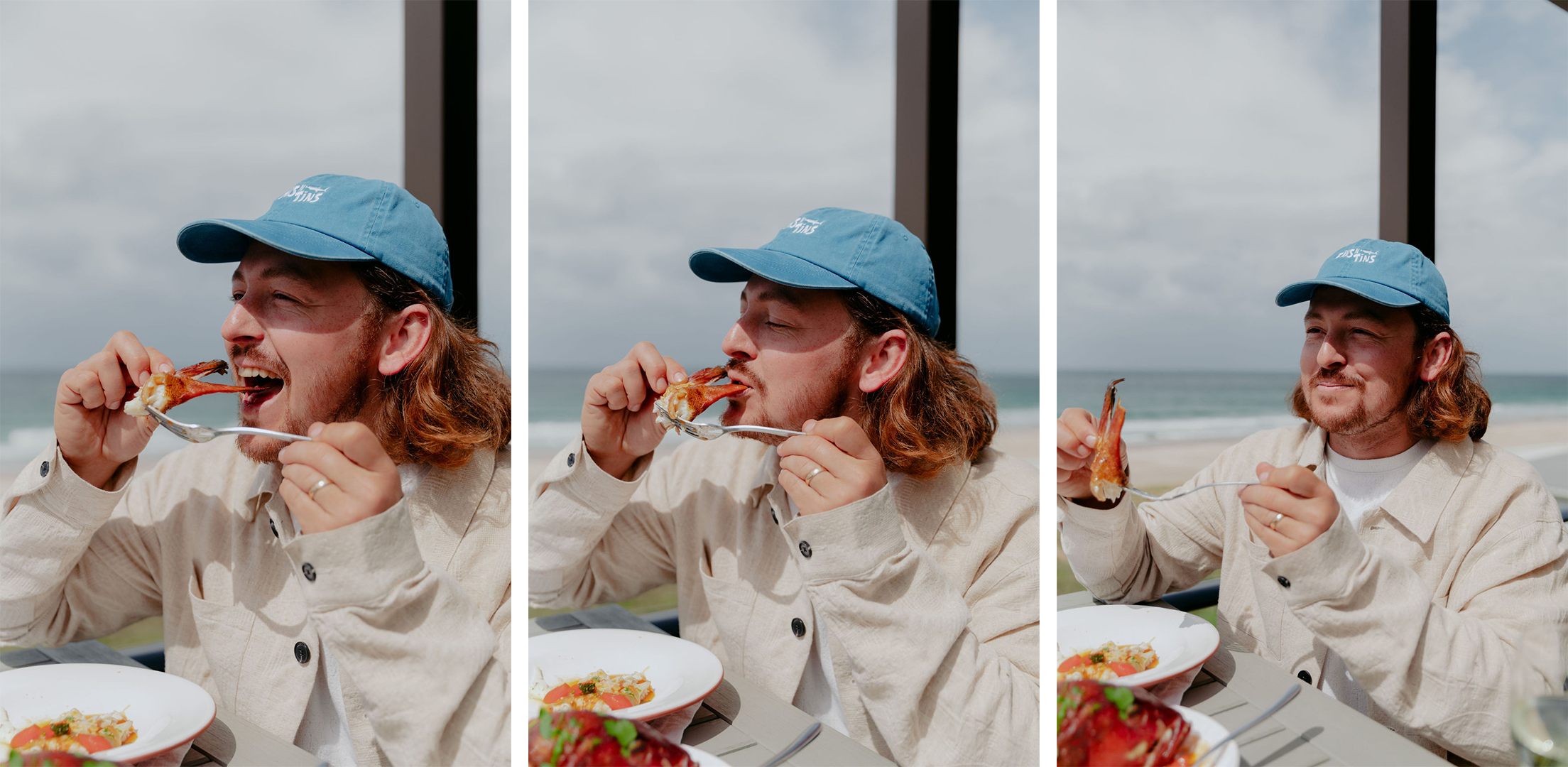
What excites you the most about being part of dish magazine?
This will actually be my first published recipe in a magazine, which feels like a pretty cool milestone in my food journey. I know my mum and grandparents will be cutting it out and saving it somewhere! Being my first magazine recipe, I am stoked to partner with a magazine that focuses on seasonal, fresh ingredients and genuine stories behind the recipes — I really connect with this. It’s also exciting that dish is published in both Australia and New Zealand — two countries with some of the best seafood in the world. I couldn’t be more excited to share a recipe that works perfectly on both sides of the ditch, and I can’t wait to get over to New Zealand and go diving for a big cray to make the recipe with.
What’s your number-one tip for home cooks when cooking seafood?
My number-one tip actually starts before you even start cooking — buy the best seafood you can find and afford. Find a good fishmonger or market and use your nose and their knowledge. Good seafood shouldn’t smell “fishy” — it should smell like the ocean, fresh and briney. Buy local, buy fresh, and don’t get too set on a specific species or dish. Go in with an open mind, choose whatever looks and smells the best on that particular day, and let that guide what you cook. Seafood is not only seasonal, but varied by the weather. For example, if there have been strong winds and big seas for an extended period of time it might be hard to source a fresh deep-sea fish — consider something from the estuaries or a good frozen or sustainably farmed product instead.
Keep up with his fishy adventures on @harrybutterfield
latest issue:
HOLIDAY 2
Our once-a-year special is packed with every recipe you need to make the most of the summer break. From baking and barbecues to fresh salads and sauces that make everything sing with flavour, HOLIDAY has you covered. We’ve even got great nibbles to enjoy with a drink while you dive into our annual puzzle section. This is an issue that sells its socks off, and it isn’t included in the dish subscription—so don’t delay. Get yours in store today and have your most delicious HOLIDAY yet.